In short
Industrial electrical work in El Paso keeps plants, warehouses and distribution centers running. The right contractor plans service capacity for growth, installs and maintains switchgear and distribution, wires instrumentation and controls, and does it all around production schedules with strict safety practices.
- Plan service size and distribution for the loads you will have in five years, not just on day one.
- Treat controls, instrumentation, security and data as part of the electrical plan.
- Schedule shutdowns and lockout/tagout before work starts.
- Pick a contractor licensed in Texas and New Mexico if you operate on both sides of the state line.
El Paso sits at the center of one of North America’s largest cross-border manufacturing regions, and every plant, warehouse and distribution center here depends on reliable power. Choosing an industrial electrical contractor in El Paso means choosing the team that will keep production lines, conveyors, dock doors and control systems running. Code Electric has served industrial clients, Fortune 1000 companies and mission-critical infrastructure from its El Paso base since 1990. This guide covers what facility managers and developers should expect.
El Paso’s industrial base keeps growing
The City of El Paso’s economic development office calls the region the “5th largest manufacturing hub”. It reports 319,628 manufacturing jobs across the El Paso, Las Cruces and Juárez region (2021 average, based on BLS and INEGI data) and an Advanced Manufacturing District at the El Paso airport. You can see those figures on the City’s advanced manufacturing page.
Much of the work on the U.S. side supports production in Juárez: warehousing, distribution, light assembly, repair and engineering. Those buildings have heavier electrical loads and less tolerance for downtime than a typical office or retail space, and that is where industrial electrical experience matters.
What industrial electrical work covers
An industrial electrical contractor in El Paso is usually responsible for:
- Service and distribution: service entrance equipment, switchgear, meter banks, distribution panels and feeders sized for production loads.
- Equipment power: circuits and connections for machinery, compressors, conveyors, dock equipment, HVAC and process equipment.
- Instrumentation and controls: wiring for sensors, control panels and the systems that monitor and run equipment.
- Lighting: high-bay and site lighting, emergency lighting and lighting controls.
- Low-voltage systems: electronic security, access control, cameras, telecom and data networks, and fire alarm.
- Underground and site work: trenching, conduit and feeders between buildings and to outdoor equipment.
Code Electric’s capabilities cover electrical, electronic security, telecom, life safety, instrumentation and control, and command and control systems, so all of these can be handled by one team. See our full list of electrical services.
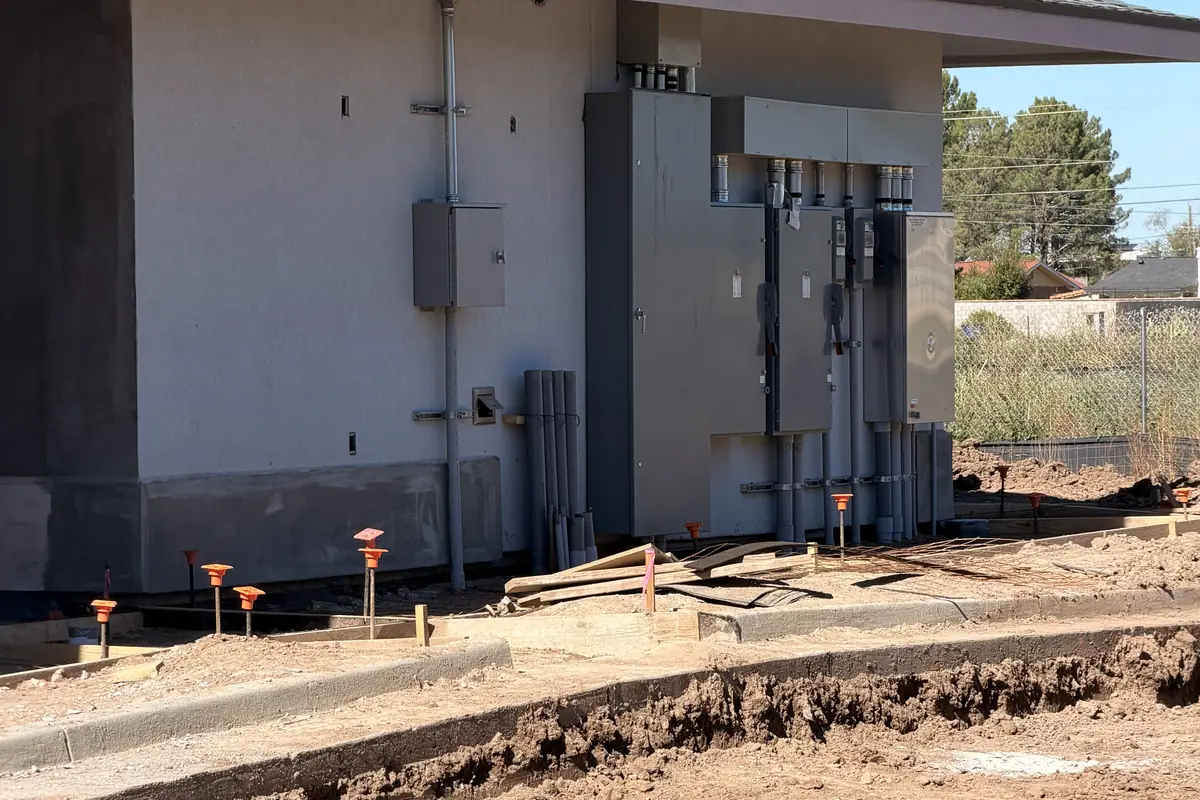
Plan power for growth, not just for day one
The most expensive electrical mistake in an industrial building is a service that is too small two years after move-in. Before design is final, work through these questions with your electrical contractor and engineer:
- What loads will the building carry at opening, and what equipment is planned for the next phase?
- Is there room in the electrical room and the switchgear for future sections and breakers?
- Where will future feeders run, and can spare conduits go in now while the ground is open?
- Which loads need backup power or a clean shutdown when the utility fails?
- What does the utility need from you, and how long will it take to set the service?
Spare conduit, space in the gear and a clear one-line plan cost little during construction and save a great deal later.
Switchgear and distribution
Switchgear and distribution equipment are the heart of an industrial electrical system. Installation has to be planned around long lead times for gear, utility coordination, testing and inspections. Once the gear is energized, every later change becomes energized work that requires a shutdown or strict safety procedures.
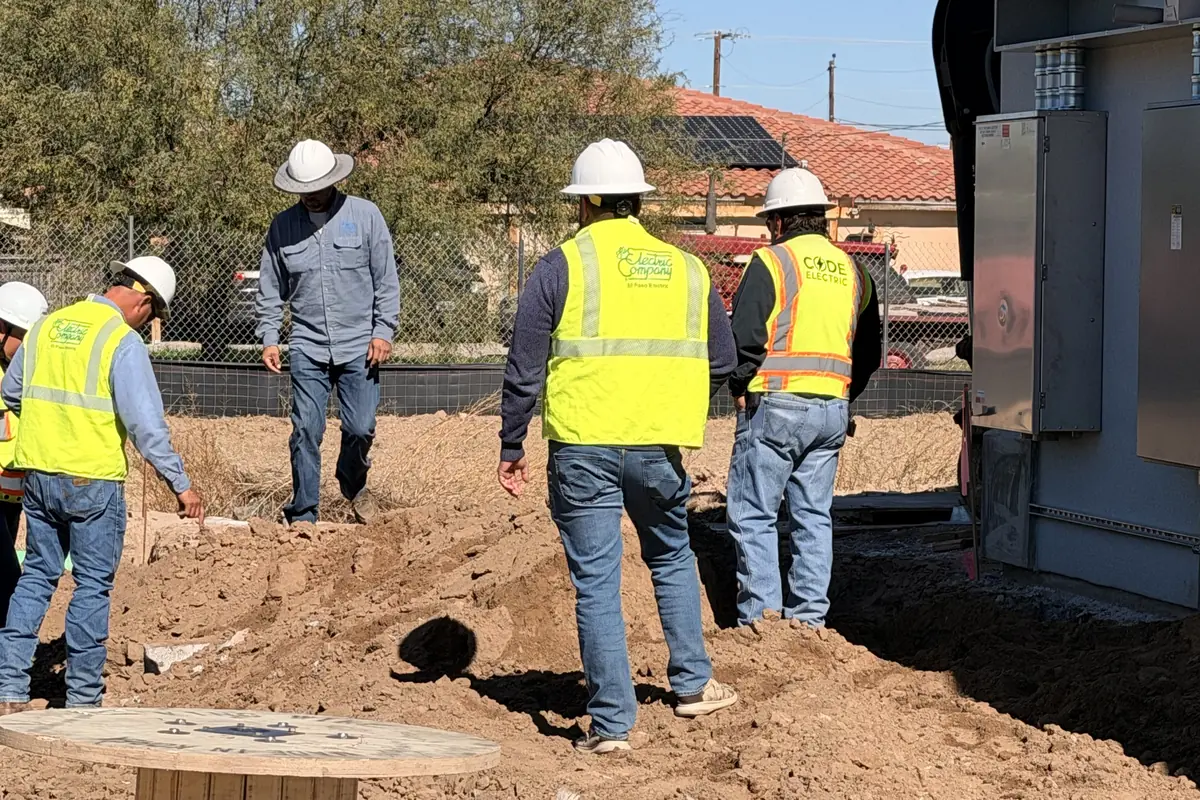
Industrial clients don’t measure us by the day we finish. They measure us by whether the line runs on Monday morning. That’s why we plan the shutdowns, the gear and the controls together from the start.
Isaias Barraza, General Manager, Code Electric
Instrumentation and controls
Modern plants and warehouses run on controls: sensors on equipment, control panels for conveyors and process lines, building automation and the networks that connect them. When controls wiring is treated as an afterthought, it ends up fighting for space in crowded cable trays and conduits, and troubleshooting becomes guesswork.
An industrial electrical contractor that handles instrumentation and control wiring alongside power can route the two correctly, separate signal and power wiring, label everything, and hand over drawings your maintenance team can use. Code Electric’s experience with instrumentation, control, and command and control systems comes from projects where uptime is critical.
Keep production running during electrical work
Most industrial electrical projects happen in buildings that are already running. Good planning keeps the disruption small:
- Shutdown windows: agree on outage dates and times with operations, and stage materials so the work fits the window.
- Temporary power: keep critical loads running while permanent equipment is installed.
- Phased cutovers: move circuits and equipment in stages instead of all at once.
- Clear communication: one superintendent who talks to your plant manager every day.
Lighting and energy use in large spaces
Warehouses and plants have high ceilings, long aisles and lights that may run around the clock, so lighting is one of the biggest electrical costs in the building. A well-planned system pairs efficient high-bay fixtures with controls such as occupancy sensors and daylight zones, keeps light levels right for the work being done, and meets the energy code that plan review checks.
Retrofits of existing lighting can usually be phased aisle by aisle so operations continue. Energy-efficient building systems are part of Code Electric’s services, and our lighting retrofit experience includes public work such as an El Paso County lighting retrofit.
Safety in industrial electrical work
Industrial sites combine high-energy equipment with forklifts, moving machinery and production staff. Federal rules apply to both the plant’s own workers and the contractor’s crews. OSHA’s electrical safety page covers the hazards, and its control of hazardous energy (lockout/tagout) guidance explains how equipment must be isolated before work begins. The standards that apply to electrical contractors, including construction Subpart K and general industry Subpart S, are listed on OSHA’s electrical contractors standards page.
Ask any industrial electrician in El Paso how they handle lockout/tagout, energized work permits and arc flash protection under NFPA 70E, and how they coordinate with your own safety program. You can read about Code Electric’s approach on our safety page.
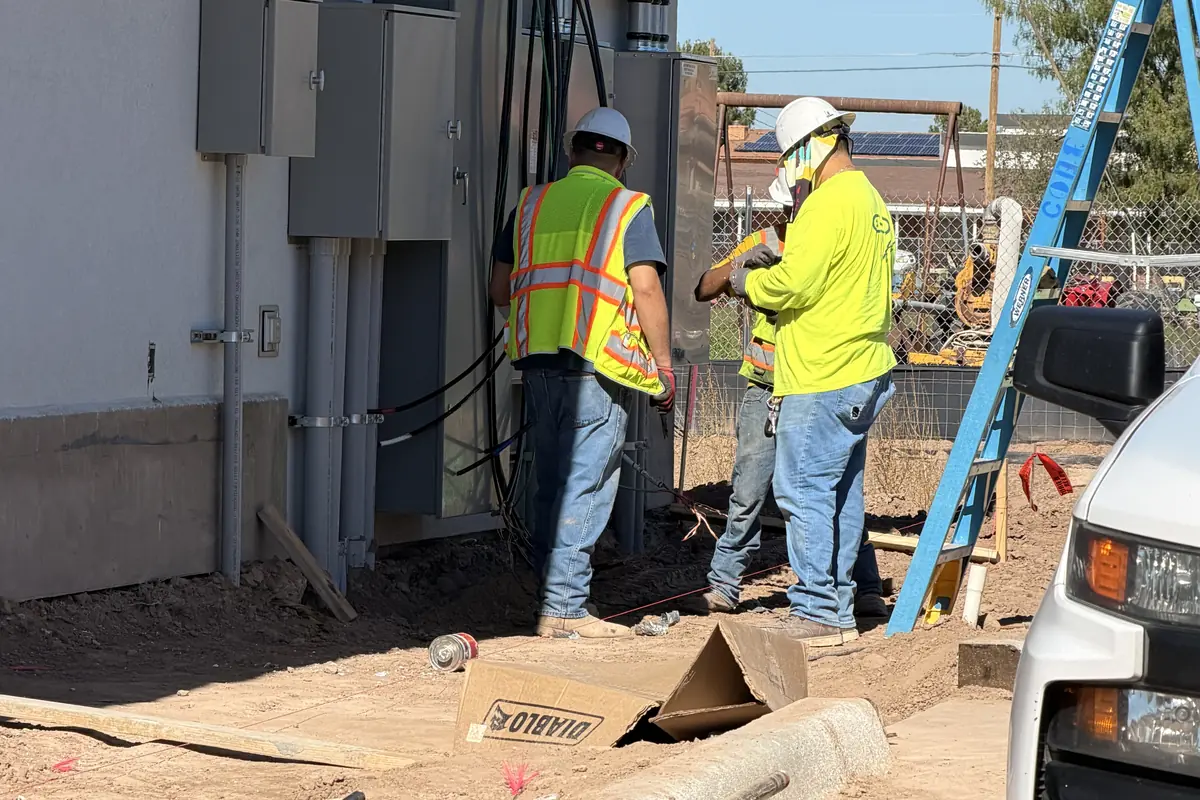
Working on both sides of the state line
Many industrial operations in the region have buildings in El Paso and in southern New Mexico, around Santa Teresa and Las Cruces. Electrical work in New Mexico requires a New Mexico license through the Electrical Bureau of the Construction Industries Division. Code Electric is licensed in Texas and New Mexico, so one contractor can support facilities on both sides.
How to choose an industrial electrical contractor in El Paso
Use this checklist when you compare bidders:
- Texas electrical contractor license, City of El Paso registration and a New Mexico license if you need one.
- Experience with switchgear, distribution and equipment power in occupied facilities.
- In-house capability for instrumentation, controls, security, data and fire alarm.
- A written plan for shutdowns, temporary power and phased cutovers.
- A documented safety program with lockout/tagout procedures.
- Bonding capacity and insurance that fit your project. Code Electric carries $3 million in bonding capacity.
- A superintendent with years of field experience who will be on your site.
For a broader checklist, read how to choose a commercial electrical contractor in El Paso. If your facility is publicly owned, see our guide for government electrical projects in El Paso, and if you are finishing out a leased industrial or flex space, our commercial electrical permit guide explains the City’s plan review.
We’ve been doing electrical work in El Paso since 1990, and our people have spent their careers in the field. Whether it’s a warehouse, a plant or mission-critical infrastructure, we bring the same licensed crews and the same attention to the details.
Gilbert Quezada, President, Code Electric
Frequently asked questions
What does an industrial electrical contractor do?
An industrial electrical contractor installs and maintains the power systems that run plants, warehouses and distribution centers: service and switchgear, distribution, equipment power, lighting, instrumentation and controls, and the low-voltage systems for security, data and fire alarm.
Can Code Electric work in an operating plant or warehouse?
Yes. Work in operating facilities is planned around shutdown windows, temporary power and phased cutovers so production keeps running, with lockout/tagout procedures for safety.
Does Code Electric install controls and instrumentation?
Yes. Code Electric’s capabilities include instrumentation and control as well as command and control systems, along with electrical, security, telecom and life safety work.
Is Code Electric licensed for industrial work in New Mexico?
Yes. Code Electric is licensed in both Texas and New Mexico and works across El Paso, Santa Teresa, Las Cruces and the surrounding region.
How early should we involve an electrical contractor in an industrial project?
As early as possible, ideally during design. Service size, switchgear lead times, utility coordination and room for future growth are all easier and cheaper to solve before construction starts.
Talk to Code Electric about your facility
Planning a new plant, a warehouse expansion or an equipment upgrade? Send us your drawings or call our office. Code Electric is at 811 N. Walnut St., El Paso, TX 79903. Call 915-581-6979, email Info@CodeElectric.Us, or request a bid online. You can also review our industrial and commercial electrical services.