In short
Picking the right commercial electrical contractor in El Paso comes down to a short list of checks: a valid Texas license with a master electrician of record, real insurance and bonding, a safety program you can see, experience in buildings like yours, and a team that knows the City’s permit and inspection process.
- Verify the contractor license with TDLR and the City of El Paso registration.
- Ask for insurance certificates and bonding capacity before bid day.
- Look for past work in your building type, from hotels to schools.
- Prefer one contractor who can also handle security, data, fire alarm and controls.
Choosing a commercial electrical contractor in El Paso is one of the decisions that shapes a building project from the first site meeting to the certificate of occupancy. The electrical scope touches every other trade, it carries real safety risk, and it has to pass inspection before anyone moves in. Code Electric has worked on El Paso job sites since 1990, and this guide shares what general contractors, developers and facility owners should check before they sign.
The checklist below works whether you are building a hotel, finishing out a clinic, renovating a school gym or adding power to an existing commercial building. If you already have plans in hand, you can skip ahead and request a bid.
What a commercial electrical contractor in El Paso does
Commercial electrical work goes far beyond outlets and light fixtures. On a typical El Paso commercial project, the electrical contractor is responsible for:
- Electrical service and distribution: the service entrance, switchgear, meter banks, panels and feeders that bring power into the building and spread it out.
- Branch wiring and devices: the circuits, boxes, receptacles and connections that every space depends on.
- Lighting and controls: interior and exterior lighting, emergency and exit lighting, and the controls that keep a building within its energy code.
- Low-voltage systems: electronic security, telecom and data cabling, and life safety systems such as fire alarm.
- Instrumentation and controls: the wiring that lets equipment, sensors and building systems talk to each other.
Code Electric’s own work spans all of these, from electrical construction and lighting retrofits to electronic security, telecom, life safety, and instrumentation and control. You can see how those fit together on our services page.
1. Confirm the Texas license, and New Mexico if you need it
In Texas, electrical licensing is handled at the state level by the Texas Department of Licensing and Regulation (TDLR). The TDLR electrical FAQ is clear that anyone performing electrical work in Texas must be licensed, and that an electrical contractor must employ a master electrician of record.
To get an electrical contractor license, TDLR requires a licensed master electrician on staff, general liability insurance of at least $300,000 per occurrence and $600,000 aggregate (plus $300,000 for products and completed operations), and proof of workers’ compensation coverage or self-insurance. Those are minimums. Larger commercial projects usually require more.
The City of El Paso adds its own step. Contractors must register with the City before they pull permits, and the City’s contractor registration requirements list the electrical contractor license, the master electrician’s state license and a certificate of insurance naming the City.
If your project is in Las Cruces, Santa Teresa, Sunland Park or anywhere else across the state line, the contractor also needs a New Mexico license. New Mexico licensing and code enforcement run through the Electrical Bureau of the Construction Industries Division.
Code Electric is licensed in both Texas and New Mexico. Our President, Gilbert Quezada, is a Master Sign Electrician in Texas and New Mexico, and our General Manager, Isaias Barraza, is a Master Electrician licensed in Texas, New Mexico and Colorado.
Code Electric has been working on El Paso job sites since 1990. When I took over in 2025, the goal was to keep the licensed, experienced people who built that name and keep showing up for the builders and owners who count on us.
Gilbert Quezada, President, Code Electric
2. Ask about insurance and bonding before bid day
Ask every bidder for a current certificate of insurance and a letter from their surety. On public work, and on many private projects, the owner or general contractor will require performance and payment bonds for the electrical scope. A contractor who can’t bond the job late in the process can stall the whole schedule.
Code Electric carries $3 million in bonding capacity, which covers a wide range of commercial, multifamily and public projects in the El Paso region. For the public side of the market, our guide to working with a government electrical contractor in El Paso covers bonding, prevailing wage and certifications in more detail.
3. Look for experience in buildings like yours
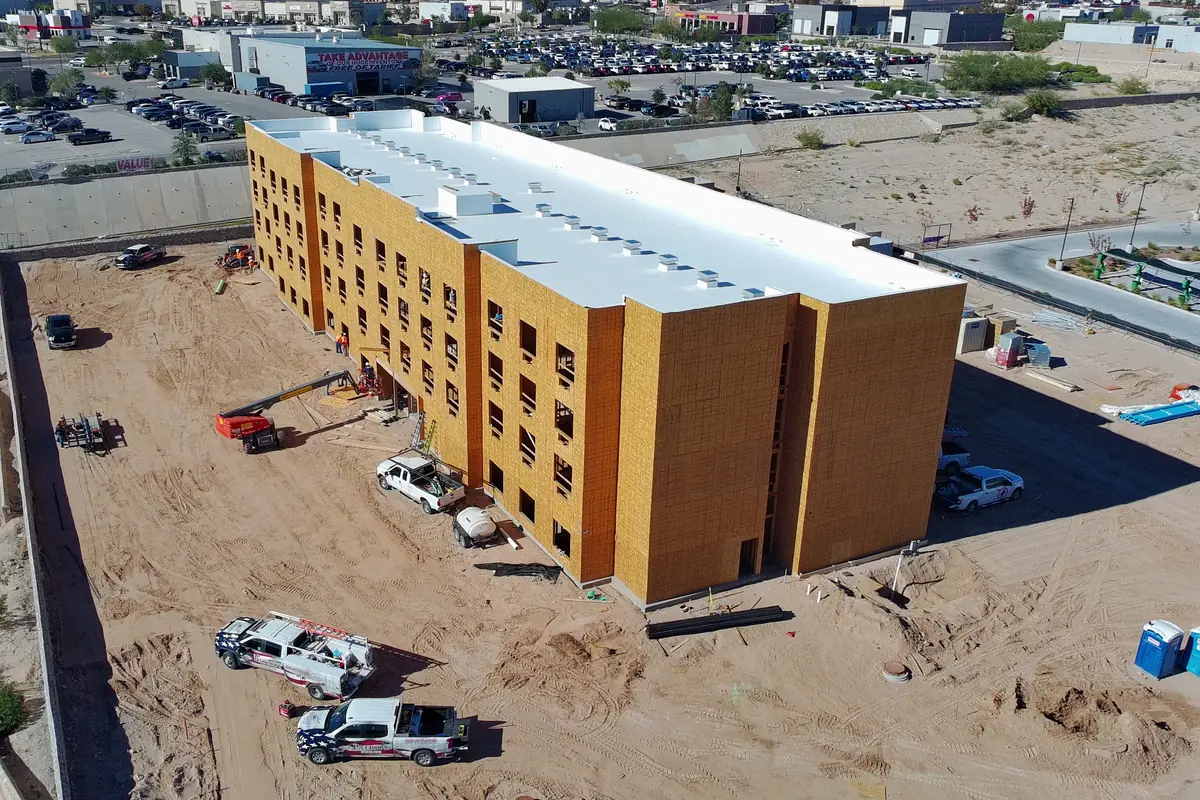
A contractor who has wired a hotel knows how room layouts repeat floor after floor. One who has worked in a clinic knows how to keep patient areas running. Ask for projects in your building type and call the general contractors behind them.
Over the years, Code Electric’s work has included:
| Sector | Example projects |
|---|---|
| Hospitality | SpringHill Suites Las Cruces, Everhome Suites, Courtyard Marriott, TownePlace Suites, Home2 Suites |
| Multifamily | Horizon Estates Apartments, StudioRes El Paso |
| Public safety and government | Town of Anthony Police Station and Municipal Court, Fire Station No. 15, El Paso County lighting retrofit |
| Education | Pebble Hills High School sports lighting, Socorro ISD auxiliary gyms |
| Healthcare | San Vicente Family Health Center, UMC Physicians Lounge |
You can browse more of this work on our projects page.
4. See how they handle safety
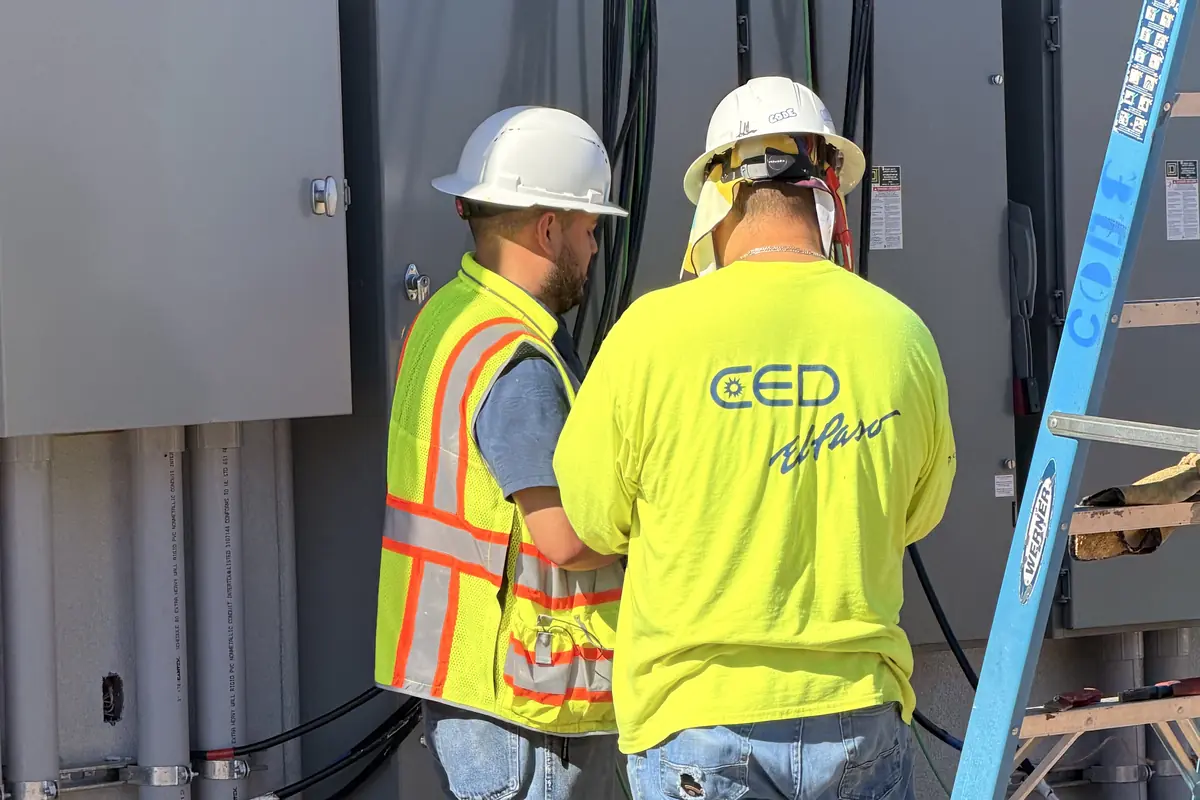
Electrical work is one of the most hazardous trades on any job site, and a contractor’s safety record affects your schedule, your insurance and your people. Federal rules for construction electrical work sit in OSHA’s construction standards, and OSHA’s standards page for electrical contractors lists the ones that apply, including Subpart K for construction and the lockout/tagout requirements.
Ask a contractor how they train crews, how they handle lockout/tagout on energized equipment, and who runs safety in the field. Code Electric’s approach is on our safety page.
5. Choose a contractor who also covers low-voltage and life safety
Many commercial buildings end up with three or four separate contractors for power, security, data and fire alarm. Every handoff adds coordination meetings, conduit conflicts and finger-pointing at closeout.
A contractor who can install power, electronic security, telecom cabling, life safety and controls under one contract gives you one schedule, one point of contact and one team responsible for making the systems work together. That combination is a core part of what Code Electric offers, and it is still uncommon among El Paso contractors.
6. Make sure they know El Paso’s permit and inspection process
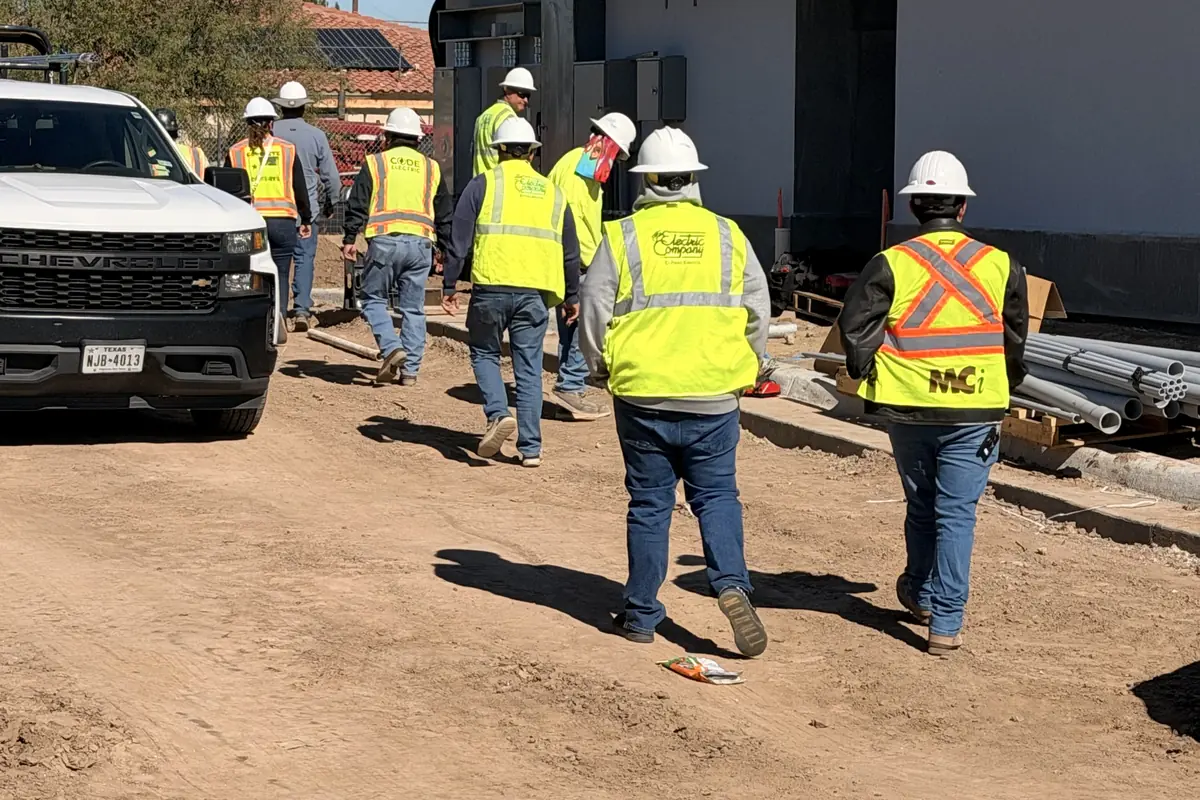
Commercial permits in El Paso go through the City’s Planning & Inspections department and its One Stop Shop, with applications, status checks and payments handled online through the Citizen Access Portal. Plan reviewers expect complete electrical drawings, and inspectors expect the work to match them.
A local contractor who works with that process every week will catch missing panel schedules or load calculations before the plans go in, not after a rejection. Our commercial electrical permit guide for El Paso tenant build-outs walks through what the City looks for.
7. Check that they can scale from tenant finish-out to industrial work
Your next project may be a small suite, a new building or an addition to a plant. A contractor with experience across commercial and industrial work can grow with you. Code Electric has served Fortune 1000 companies, universities, government agencies and mission-critical infrastructure, and our guide to industrial electrical contractors in El Paso explains what plants and warehouses should look for.
Questions to ask any commercial electrician in El Paso
Bring this list to your next bid review:
- What is your TDLR contractor license number, and who is your master electrician of record?
- Are you registered with the City of El Paso, and licensed in New Mexico if we need it?
- Can you send a certificate of insurance and a bonding letter for a project this size?
- Which projects like ours have you completed, and can we call those general contractors?
- Who will be the superintendent on site, and how many years have they run work?
- Can you also install security, data, fire alarm and controls, or will we need other trades?
- How do you handle safety training and lockout/tagout?
- How do you coordinate plan review and inspections with the City?
Why builders choose Code Electric as their commercial electrical contractor in El Paso
Code Electric was founded in El Paso in 1990 and incorporated in 1995 by Rick Barraza. Since 2025, the company has been owned and run by Gilbert Quezada. The leadership team brings master licenses in Texas and New Mexico, and our superintendent has more than 20 years in the trade.
On our jobs, the license isn’t just a number on the bid. The people running the work hold master licenses in Texas and New Mexico and have spent decades in the field. That experience is what we bring to every inspection and every schedule meeting.
Isaias Barraza, General Manager, Code Electric
You can read more about our history on the About page.
Frequently asked questions
How do I check an electrical contractor’s license in Texas?
Texas electrical contractors are licensed by the Texas Department of Licensing and Regulation (TDLR). Ask the contractor for its license number and the name of its master electrician of record, then confirm both with TDLR. In El Paso, the contractor should also be registered with the City before pulling permits.
Do I need a separate New Mexico license for work in Las Cruces or Santa Teresa?
Yes. Work in New Mexico needs a contractor licensed there through the Construction Industries Division. Code Electric is licensed in both Texas and New Mexico, so one contractor can cover projects on both sides of the state line.
What insurance should a commercial electrical contractor carry?
TDLR sets minimums of $300,000 per occurrence and $600,000 aggregate in general liability, plus workers’ compensation coverage. Most commercial owners and general contractors require higher limits, so check your contract and ask for a certificate before work starts.
Can one contractor handle electrical, security, data and fire alarm?
Yes, if the contractor has those capabilities. Code Electric installs electrical systems, electronic security, telecom and data cabling, life safety systems, and instrumentation and controls, which reduces handoffs between trades.
What types of commercial projects does Code Electric work on?
Hotels, apartment communities, schools, healthcare facilities, public safety buildings, government lighting retrofits and industrial facilities across the El Paso region and southern New Mexico.
Talk to Code Electric about your project
If you are planning a commercial project in El Paso, Las Cruces or anywhere in the region, send us your plans or call our office. Code Electric is at 811 N. Walnut St., El Paso, TX 79903. Call 915-581-6979, email Info@CodeElectric.Us, or request a bid online. You can also explore our full list of commercial electrical services.